
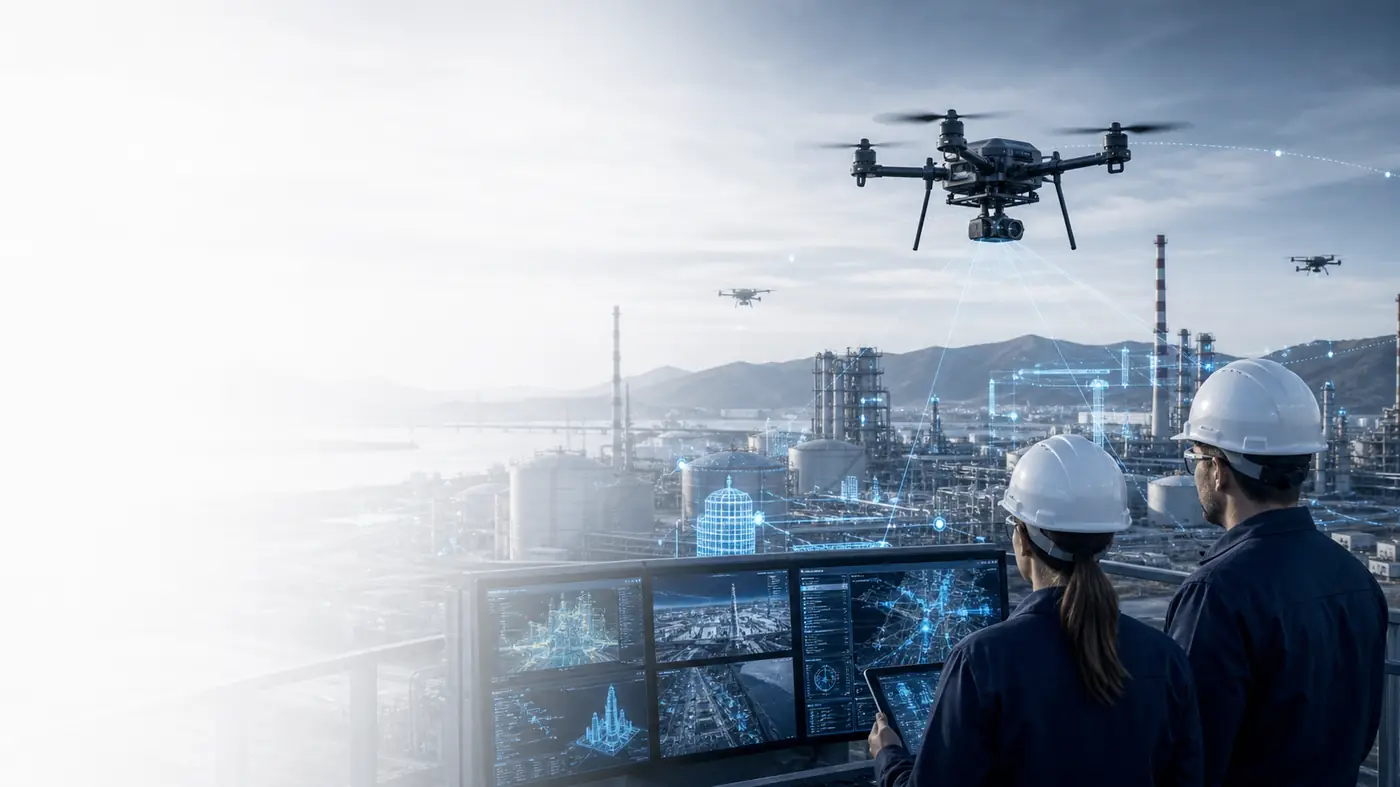
The Problem This Solves
A drone program is not production-ready just because the aircraft can fly. Real operations require mission planning, pilot or operator workflows, fleet management, detect-and-avoid strategy, connectivity, maintenance, geospatial data processing, compliance evidence, and integration with the systems that act on inspection results.
Many teams get stuck after the proof of concept. They collect images or sensor data, but processing is manual, results are hard to compare over time, and regulatory or safety requirements remain separate from the product workflow. The business value depends on turning flight operations into repeatable, auditable, data-rich processes.
How Vertex Builds It
Vertex starts with the operational mission: what needs to be inspected, mapped, measured, monitored, or automated. We then design the platform around field constraints: flight rules, connectivity, payloads, weather, operator roles, edge compute, battery cycles, safety cases, and data handoff.
The implementation connects drones to the rest of the enterprise stack. That can include mission planning tools, fleet telemetry, sensor fusion, image processing, mapping pipelines, anomaly detection, asset management integration, dashboards, and compliance reporting. We keep autonomy practical: enough automation to improve repeatability, with human oversight where risk requires it.
Where It Fits
Industrial site inspections for energy, utilities, construction, and manufacturing.
Mapping and progress tracking for infrastructure, agriculture, and land operations.
BVLOS readiness programs with safety, connectivity, and compliance workflows.
Computer vision pipelines for damage, corrosion, thermal anomalies, or asset condition.
Architecture & Delivery Flow
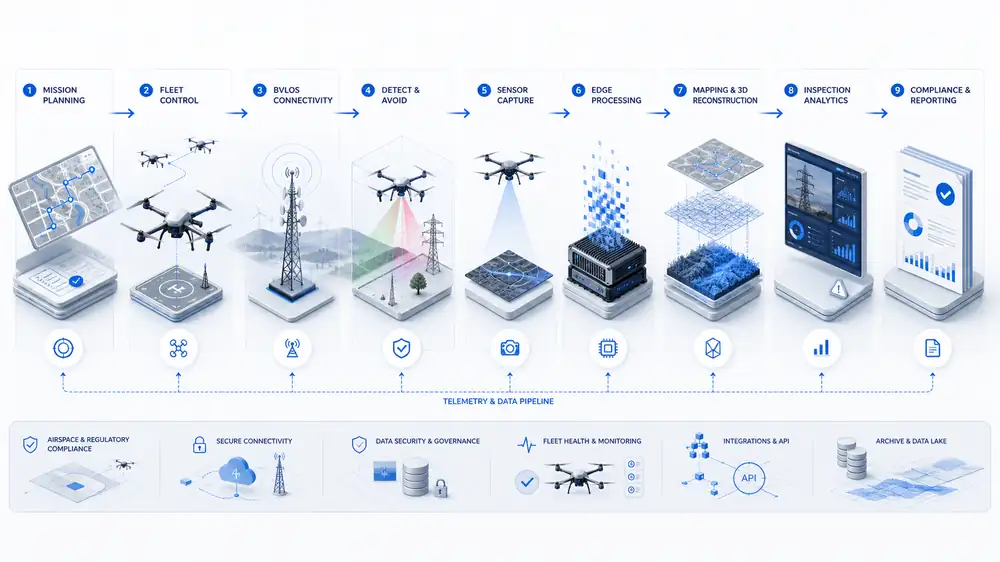
The delivery flow is intentionally practical: validate the business case, identify the riskiest technical assumptions, build the smallest useful production path, and then harden the operating model so the system can be owned after launch.
Expected Outcomes
Faster and safer inspection cycles with fewer manual site visits.
Higher data consistency through repeatable mission planning and capture standards.
Reduced review time through automated processing and anomaly prioritization.
Better compliance posture through audit trails, operator workflows, and reporting.
Clearer ROI because drone data connects to maintenance, operations, and asset decisions.
Frequently Asked Questions
Does Vertex provide drone hardware?
We focus on system architecture and integration. We can help evaluate hardware and payload choices, then connect them to the software, data, and operational workflows required for production.
Can this support BVLOS operations?
Yes, the architecture can support BVLOS readiness, including connectivity, detect-and-avoid considerations, telemetry, safety workflows, and compliance evidence.
What happens to drone data after capture?
We design pipelines for upload, edge processing, geospatial alignment, anomaly detection, review, reporting, and integration with business systems.
How do you keep drone workflows safe?
We combine mission constraints, operator roles, telemetry monitoring, audit logs, fail-safe behavior, and appropriate human approval points.