
OpenAI's Navier-Stokes Proof: What It Means, and What It Doesn't

On 8 September 2026, OpenAI published a research post saying an internal AI system had resolved the Navier-Stokes existence and smoothness problem, one of the Clay Mathematics Institute's seven Millennium Prize Problems. The Navier-Stokes equations describe how fluids such as air and water move, and they sit underneath aircraft design, weather forecasting and the study of blood flow. The question that had stood for roughly 90 years was whether a smoothly moving three-dimensional fluid, as described by these equations, can ever break down, with speeds growing without limit in a finite time. OpenAI says its system proved that it can.
What was actually proved. According to OpenAI's paper, the system constructed a case in which a fluid that starts at rest, with a smooth external force applied to it and finite energy throughout, develops a singularity in finite time. In the Clay Institute's official problem statement, this corresponds to the statements labelled C and D, the routes that disprove smoothness rather than prove it. OpenAI released both a written proof and a formal version in Lean, a proof assistant that checks every logical step mechanically. Quanta Magazine reported that the Lean formalisation gives mathematicians added confidence in the result, while detailed human scrutiny is still under way.
How it was done. For anyone tracking AI capability, the method matters more than the maths. OpenAI says it used an unreleased internal model that it describes as significantly more capable than GPT-6 Astra, its newest public model, running as a system of coordinating agents with access to code execution and a cached copy of the internet. The group that produced the result involved on the order of 10,000 concurrent agents. OpenAI says they reached the result about 88 hours after the first agents were launched, and that formal verification in Lean took a further 17 hours. For the Navier-Stokes work alone, the company reports 2.7 million messages between agents and roughly 130 billion output tokens. Outside estimates reported by Fortune put the computing bill in the millions of dollars.
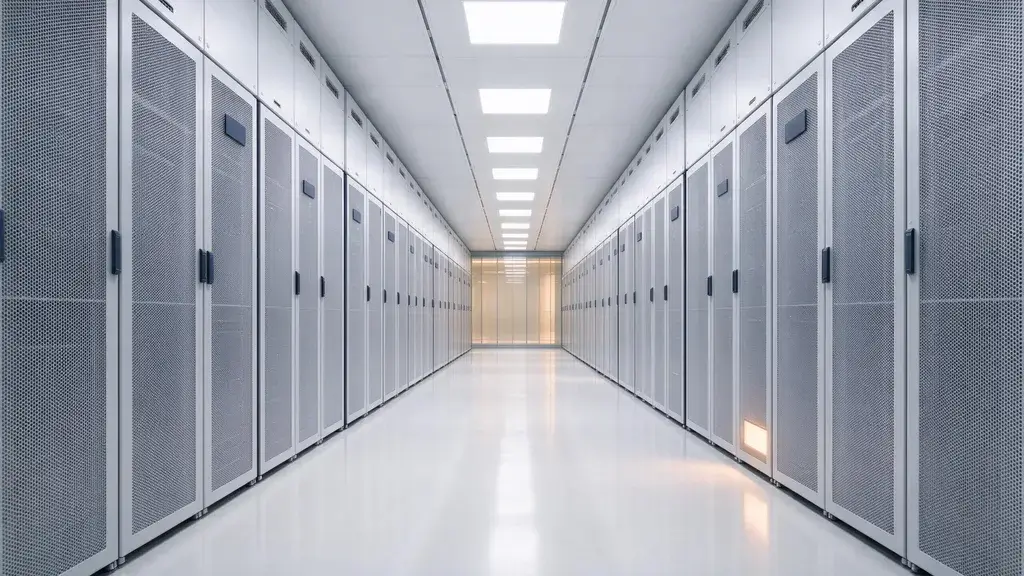
OpenAI says the result came from roughly 10,000 coordinating agents working for about 88 hours, a scale of computing far beyond everyday business use.
The caveats are real. The Clay Mathematics Institute said on 11 September that the problem has "apparently been settled", but it has not awarded the prize and describes its review as deliberately unhurried. Mathematicians have also questioned how much the result answers the question most of them cared about. As Scientific American reported, the Clay formulation allows an external force to act on the fluid, while most research groups had been working on the version without one. University of Chicago mathematician Luis Silvestre told the magazine that, in his view, the Clay problem is settled but the central question about the equations is not, and a later preprint by three mathematicians argued that OpenAI's approach cannot be extended to the unforced case without fundamentally new ideas.
There is also a dispute over credit. NYU mathematician Tristan Buckmaster and Anthropic researcher Levent Alpöge had been pursuing a closely related line of work and announced their own result on the forced Euler equations, a related fluid problem, about 12 hours before OpenAI's release. Buckmaster has alleged that OpenAI turned to the problem after learning of their progress. OpenAI says its effort began on 1 September after hearing rumours it later linked to the pair, that it did not see their work before they released it, and that an internal investigation found Buckmaster's own Codex prompts could not have influenced the system. OpenAI also says it does not intend to claim the $1 million prize. Separately, Scientific American reported that 25 Fields Medal winners signed a statement warning that treating famous problems as AI benchmarks is at odds with mathematics' aim of building human understanding.
Why it matters outside mathematics. For businesses, the lesson is not about fluid dynamics. It is that frontier labs are now running AI as large, coordinated teams of agents for days at a time, and that the output can be checked by a machine rather than taken on trust. The same pattern of many agents, tool access, long run times and automatic verification is what will shape practical work in areas such as code migration, engineering simulation, data reconciliation and compliance testing. OpenAI itself says it shared the result partly to inform the world about the pace of AI progress and what to expect from upcoming models.

The Clay Mathematics Institute says its review of the claimed solution will be deliberately unhurried, and no prize has been awarded.
What mid-sized companies should take from it. First, verification is becoming the real bottleneck. The Lean proof is what made the claim credible, and the business equivalent is automated tests, reconciliations and audit trails that check AI output before anyone acts on it. Second, cost and scale still separate frontier demonstrations from everyday use: a multi-million-dollar run of 10,000 agents is a research event, not a template for a finance or operations team. Third, framing matters. The debate about the external force shows that an AI system will solve the problem exactly as it is stated, so the people writing the brief need to state what they actually want. Companies that invest now in clear problem statements and checkable outputs will be best placed as these capabilities reach commercial models.
Kavya Chaudhary
Technology writer and researcher with expertise in emerging technologies, digital transformation, and business strategy. Passionate about breaking down complex concepts for readers.